
Leung, et al 2014
Effects of 18-month low-magnitude high-frequency vibration on fall rate and fracture risks in 710 community elderly – a cluster-randomized controlled trial
This study evaluated the use of low-magnitude high frequency vibration (LMHFV) program to reduce falls in older women. After 18 months, the incidence rate of falls was 46% lower in the vibration group than in the control group. The incidence rate of fall related fractures was not significantly different between the vibration and control group.
Population: 710 healthy women aged 60+ years. 364 received LMHFV, 310 control group without any treatment.
Method: LiV 5 x 20mins per week for 18 months. Control sedentary lifestyle.
Cheung, et al 2016
Improvement in muscle performance after one-year cessation of low-magnitude high-frequency vibration in community elderly
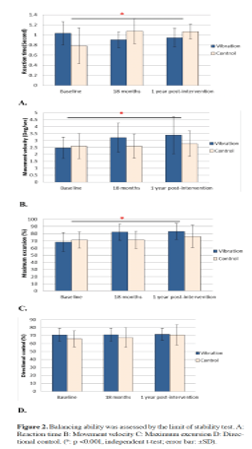
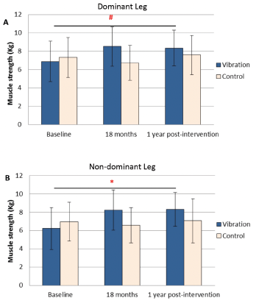
This follow up study investigated the effects on muscle performance 1 year after use of low-magnitude high frequency vibration. The benefits of LMHFV for balancing ability, muscle strength and risk of falling in elderly were retained after 1 year of stopping LMHFV.
Population: 59 healthy women aged 60+ years from previous clinical study (Leung, et al 2014). 34 vibration, 25 controlled.
Results
Primary outcome: falls | Secondary outcomes: knee extensor strength, balancing ability, bone mineral density (BMD) & quality of life (QoL)
Falls

Balancing Ability
Muscle strength
Bone Mineral Density
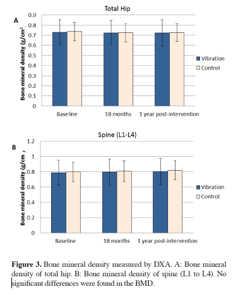
Conclusion: LIV 46% less falls at 18 months & 30 months – Muscle Strength and Balance advantages maintained after 12 months cessation of LIV.